

Plant Health 2020 Online, August 2020
Raksha Singh and Stephen B. Goodwin
Crop Production and Pest Control Research Unit, U.S. Department of Agriculture-Agricultural Research Service (USDA-ARS), Purdue University campus, West Lafayette, IN 47907
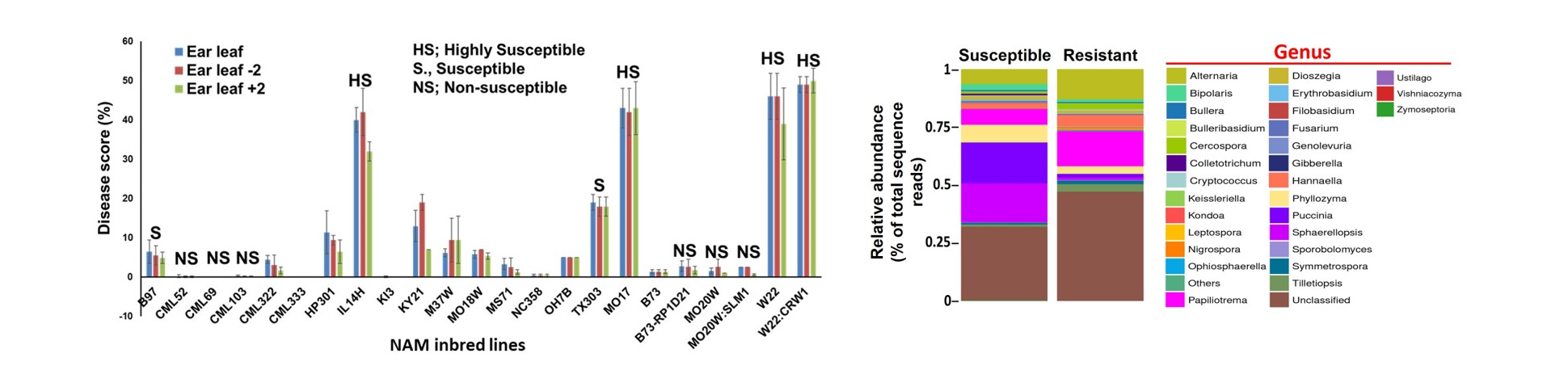
Tar Spot is a foliar disease of corn, caused by the obligate pathogen Phyllachora maydis, that has recently emerged as an economic concern for corn production in the United States. We investigated leaf microbiomes in relation to corn cultivars with differential tar spot symptoms under P. maydis infestation in field conditions. Comparative metagenom